
Thinking of Visiting Hadrian’s Wall? Here’s Where We’d Start
Hadrian’s Wall is one of Northumberland’s best-known landmarks and for many people coming on holiday to the area, visiting Hadrian’s Wall is high on their list of things to see and do. If you’ve never been before, the first question is often simply: where do I start?
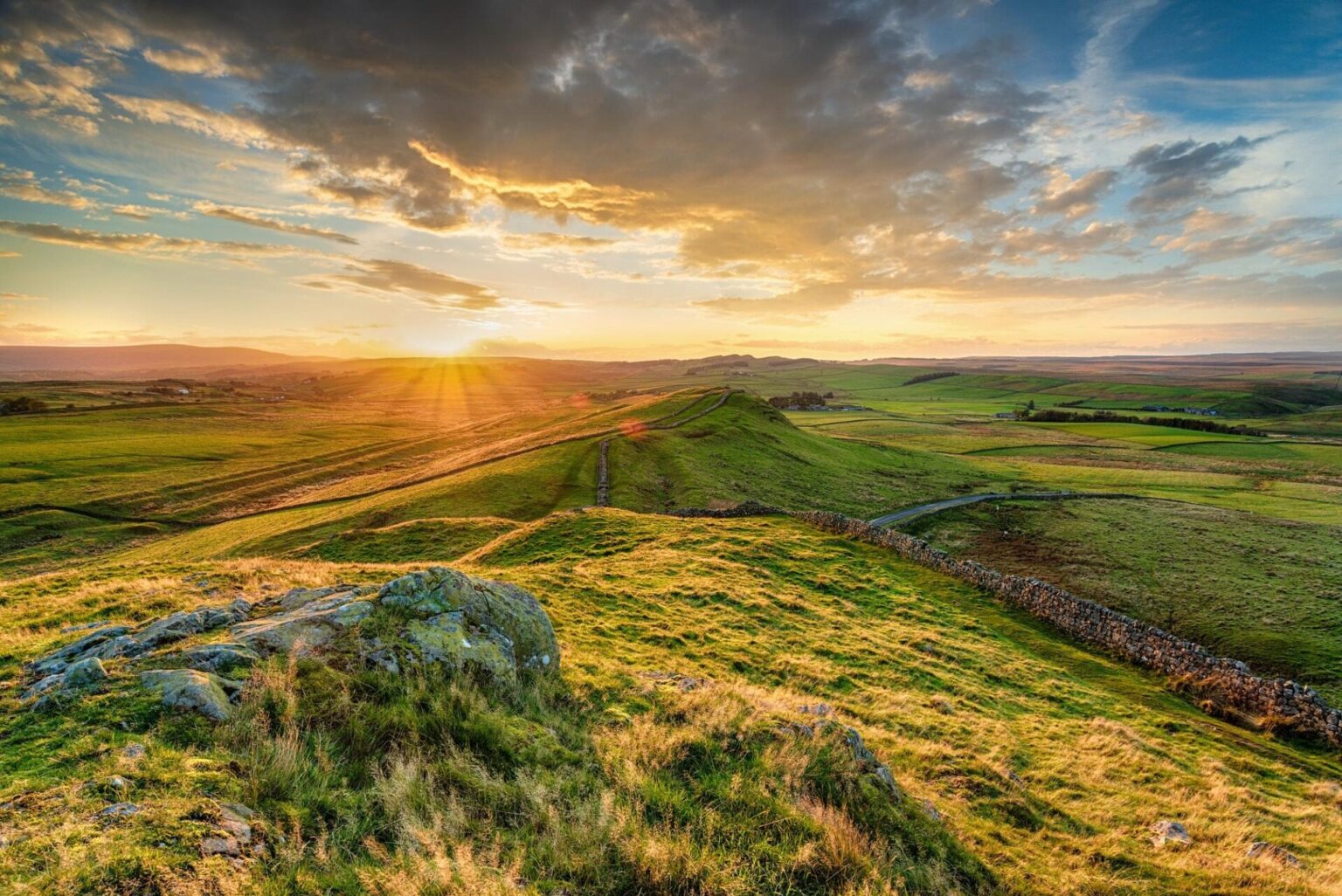
There’s no single entrance or starting point. The Wall itself was around 73 Roman miles long, while the Hadrian’s Wall Path (National Trail) stretches for 84 miles from Wallsend in the east to Bowness-on-Solway in the west. After almost 2,000 years, what remains of the Wall varies considerably along the route. In some places there are substantial and impressive stretches still standing, while elsewhere the remains are much less visible
We know the Wall pretty well between us at Wooden Star Cottages. Some members of our team have particular favourite sections they head to for a few hours before going home, while others have walked the entire 84-mile National Trail and still remember experiencing all four seasons along the way – sunshine, rain, wind and even sleet!
Walking the entire route certainly isn’t necessary to experience Hadrian’s Wall – although being prepared for a change in the weather is always a good idea.
How much of Hadrian’s Wall do you actually need to walk?
Walking the full Hadrian’s Wall Path from coast to coast can be a great experience – but it certainly isn’t the only way to see it.
For most visitors staying with us, we’d suggest choosing certain sections to explore. You can spend an hour or two walking beside the Wall, visit one of the Roman forts, combine a museum with a short walk or make a full day of it.
Having walked different sections ourselves, we’d also say don’t judge a walk simply by the number of miles. Around the central section in particular, there are some surprisingly steep climbs and descents. Three or four miles here can feel very different from three or four miles on the flat.
Which part of Hadrian’s Wall should you visit?
Steel Rigg is a good starting point if your main aim is to get out and walk beside the Wall. There’s parking at Steel Rigg, or at The Sill a little further along, and from here you can follow the path towards Sycamore Gap, with the Wall climbing and dipping across the landscape ahead of you.
Sycamore Gap is probably one of the most recognisable spots along the entire Wall. The tree and its distinctive setting appeared in Robin Hood: Prince of Thieves and, over the years, became one of the most photographed views in Northumberland.
The loss of the tree in 2023 was felt particularly keenly here in Northumberland. The location has a story of its own now, and there have been encouraging signs of new growth from the stump. Part of the felled tree can also be seen at The Sill. Perhaps just as importantly for visitors, this is a beautiful section of Hadrian’s Wall in its own right. The walk to the gap, with the Wall following the natural contours of the landscape, is very much part of the experience and one which we would definitely recommend.
If you’d like to turn your visit into a walk, there’s a great four-mile circular route from Steel Rigg which takes in Sycamore Gap and some of this particularly scenic stretch of the Wall. You can, of course, carry on further if you want a longer walk, but four miles is a good option if you’d like to experience the Wall without it taking up your whole day. We’ve included a link to the National Park route so you can see the full walk and directions before you set off.
You could also easily make more of a day of it. The Sill National Landscape Discovery Centre is nearby, so it works well before or after your walk for something to eat or drink – and there’s more there than simply a café.

The Sill is a useful place to know about
The Sill: National Landscape Discovery Centre is a great place to include in your day and one we highly recommend.
It’s somewhere to stop for a coffee or something to eat, but it also has exhibitions exploring the landscape, nature and heritage of the area. There are often activities and events – some specifically aimed at children especially during peak school holidays. As such, a visit to The Sill works particularly well as part of a family day out, or simply as somewhere to take a break between a walk and visiting one of the Roman sites.
Should the Northumberland weather live up to its reputation, having somewhere warm and dry nearby is never a bad thing.
We’ve put a link to the Sill as it’s always worth checking what’s on before you visit, as exhibitions and activities change throughout the year.
Discovering the history behind the Wall
You can quite happily walk beside Hadrian’s Wall without knowing very much about Roman history. However, we’d recommend including at least one Roman site during your stay because it can completely change your understanding of what you’re looking at.
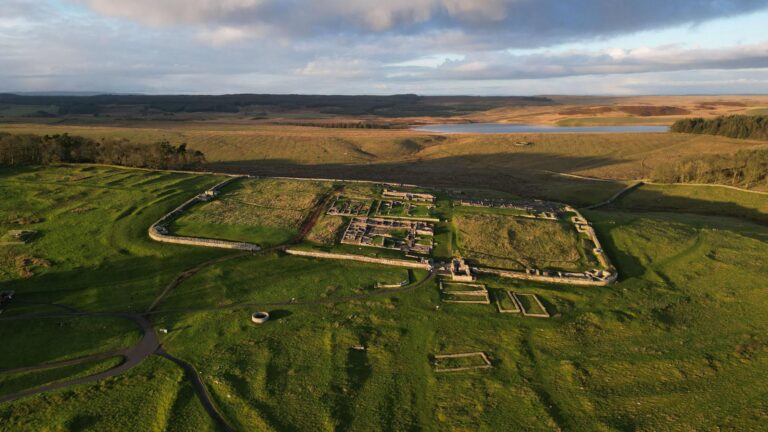
Housesteads Roman Fort is the best preserved auxiliary fort built directly on the Wall. It’s often one of the classic images of the wall as it’s on a ridge with great landscape views and fascinating ruins of the fort showing how soldiers lived. Given it’s location, Housesteads does require a rather steep uphill walk from the car park.
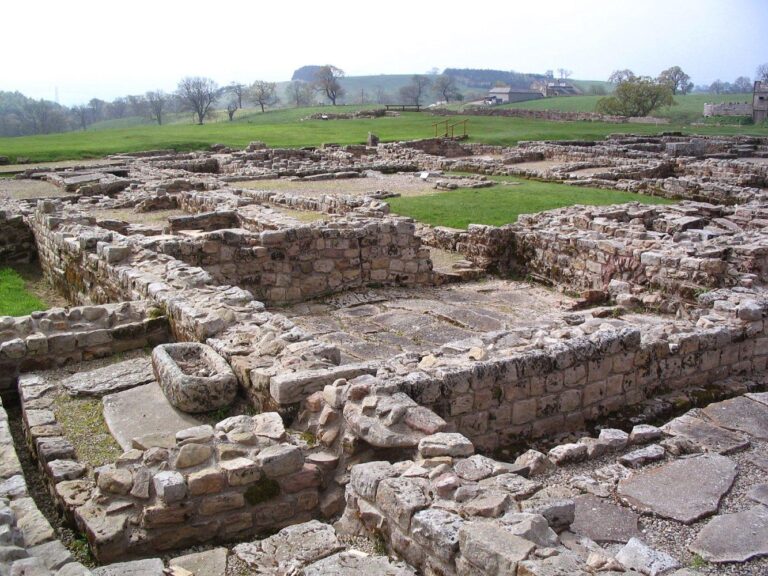
Vindolanda, (near The Sill), is located about a mile from the wall, in the valley and therefore more accessible with fairly flat walking paths. It’s an incredible site as it includes both a military fort and civilian town. The museum is world class and houses an ever expanding range of artefacts (the active archaeological dig is ongoing) including shoes, letters and everyday objects – which give you a much more personal glimpse of the people who lived here almost 2,000 years ago. Perhaps the most famous find is the Vindolanda Tablets – the oldest surviving hand written documents in Britain.
After visiting somewhere like Vindolanda, it’s much easier to look at the Wall as more than simply an ancient structure stretching across the countryside. Both Vindolanda and Housestead require an entry fee.
How much time do you need?
You can experience Hadrian’s Wall in just a few hours, but if you have more time, there’s plenty to bring you back to different parts of it during your holiday.
If you’ve only got a few hours, we’d suggest stopping at The Sill and combining it with a short walk around Steel Rigg. With half a day, Housesteads and a walk along the Wall work well together, or you could spend a couple of hours at Vindolanda before driving through the central section of Hadrian’s Wall country.
If you’ve got a full day, you can take things more slowly, perhaps combining Vindolanda or Housesteads with a longer walk and stopping at The Sill for coffee or lunch along the way.
If you’re staying in one of our cottages for a week, there’s no reason to try to fit everything into one day. Hadrian’s Wall is somewhere you can easily come back to during your stay, exploring a different section or attraction each time.
You might explore Steel Rigg and Sycamore Gap first, then visit Chesters Roman Fort another day. Corbridge is another good option, combining the Roman town with some time in the village itself, while further west you could explore a very different part of Hadrian’s Wall country around Lanercost.
There are walks of all lengths along the route too, from a short stroll beside the Wall to a much longer day’s walk. If you enjoy walking, the AD122 bus can be particularly useful as it gives you the option of walking a section in one direction rather than having to retrace your steps.
What if you’d rather walk with someone who knows the Wall?
If it’s your first visit, another option is to join an organised walk or guided tour.
There are guided walks available along different sections of Hadrian’s Wall, ranging from shorter walks to longer days out. As well as taking away the worry of planning a route, walking with a guide can add a completely different dimension to the experience. It’s easy to walk past something without realising its significance, whereas a good guide can help bring both the Roman history and the surrounding landscape to life.
If this appeals, it’s worth looking for scheduled walks taking place during your stay or booking a guided walk in advance. Northumberland National Park run a series of guided walks across the Park – we’ve included a link below for further information.
Is Hadrian’s Wall good for children?
Visiting Hadrian’s Wall with children can be a great family day out, particularly if you mix some history with plenty of time outside.
The forts and museums help bring Roman Britain to life, while ruins, open countryside and the chance to actually walk alongside the Wall make it much more tangible than simply reading about the Romans.
You certainly don’t need to take children on a long hike. A shorter walk, perhaps combined with one of the Roman sites or a stop at The Sill, is often more enjoyable for everyone.
Just remember that some of the most spectacular stretches aren’t flat. There are steep climbs, uneven paths and plenty of steps, so allow more time than the mileage on the map might suggest.
A few practical things we’ve learnt
This is Northumberland, so we’d always put a waterproof and an extra layer in the car – even if the weather looks promising when you set off!
You don’t necessarily need walking boots to visit a museum or fort on a dry summer day, but if you’re planning to walk any distance along the Wall, comfortable, sturdy footwear makes a big difference.
It’s also worth remembering how exposed some sections are. As our team member who walked the full route in its first year discovered, sunshine can quite quickly turn to rain or even sleet. You may not experience four seasons in one day, but it’s worth being prepared for the possibility!
Take water with you, particularly in summer, and don’t forget sunscreen on brighter days. Once you’ve set off along the path, there isn’t necessarily somewhere around the next corner to buy a drink.
Can you visit Hadrian’s Wall for free?
Yes. You don’t have to buy a ticket simply to walk alongside Hadrian’s Wall.
The National Trail and public footpaths allow you to explore many sections of the Wall and surrounding countryside, although you may need to pay for parking.
The Roman forts, museums and archaeological attractions generally have their own admission charges, so it’s worth checking individual websites before you set off. Certain sections of the wall are in the guardianship of Engligh Heritage, National Trust or their own charitable trust, such as Vindolanda and therefore have their own set costs.
.
The AD122 bus
If you’re visiting Hadrian’s Wall during the main season, take a look at the AD122 bus before planning your day.
It connects a number of the main attractions and walking areas along the Wall and is particularly useful if you want to walk in one direction rather than having to turn around and retrace your steps back to the car.
If you’re considering using it, check the current timetable before setting off as services are seasonal and can change.
A few final thoughts on visiting Hadrian’s Wall
It’s easy to forget, when you live and work in this part of the country, just how remarkable Hadrian’s Wall is.
There’s something quite special about standing beside something that was built almost 2,000 years ago, but it’s also the setting that makes this part of the Wall so memorable. In the central section particularly, the Wall follows the hills and crags for miles, and you get a real sense of why the Romans chose this landscape.
You don’t have to walk far to experience it either. Some of our team know the satisfaction – and tired legs – that come with completing the entire 84-mile National Trail. Others know the Wall through favourite sections they’ve walked time and again.

Wooden Star Cottages offers the perfect base to experience the beautiful county of Northumberland. Book your stay at Wooden Star Cottages today and prepare for an unforgettable escape into the heart of one of England’s most beautiful regions.